Discover cleaning, drainage and correct use recommendations for pergola and awning maintenance. Learn what to consider for long-term use with Palmiye Global.
Installing a pergola or awning is not the end of the process. Like any outdoor system, it needs to be checked from time to time. A good-quality system can provide years of use. This does not require special maintenance every day. Adopting a few simple habits and spotting minor issues before they become more serious is often enough.
Keeping the Fabric Clean Makes a Difference
Awning fabric collects more than just dust. On systems installed beneath trees, leaves, pollen and bird droppings can also settle on the surface. Dirt left on the fabric for long periods after rainfall becomes harder to remove.
It is best to remove dry dust with a soft brush first. The manufacturer's recommended cleaning method can then be followed. Very stiff brushes or chemicals unsuitable for the fabric can damage the surface.
Retracting an awning while it is wet is another point to consider. Rather than rolling up the fabric immediately after rain and leaving it that way, it is better to let it dry whenever possible. Trapped moisture can lead to unpleasant odours and mould over time.
Do Not Leave Debris on the Pergola Roof
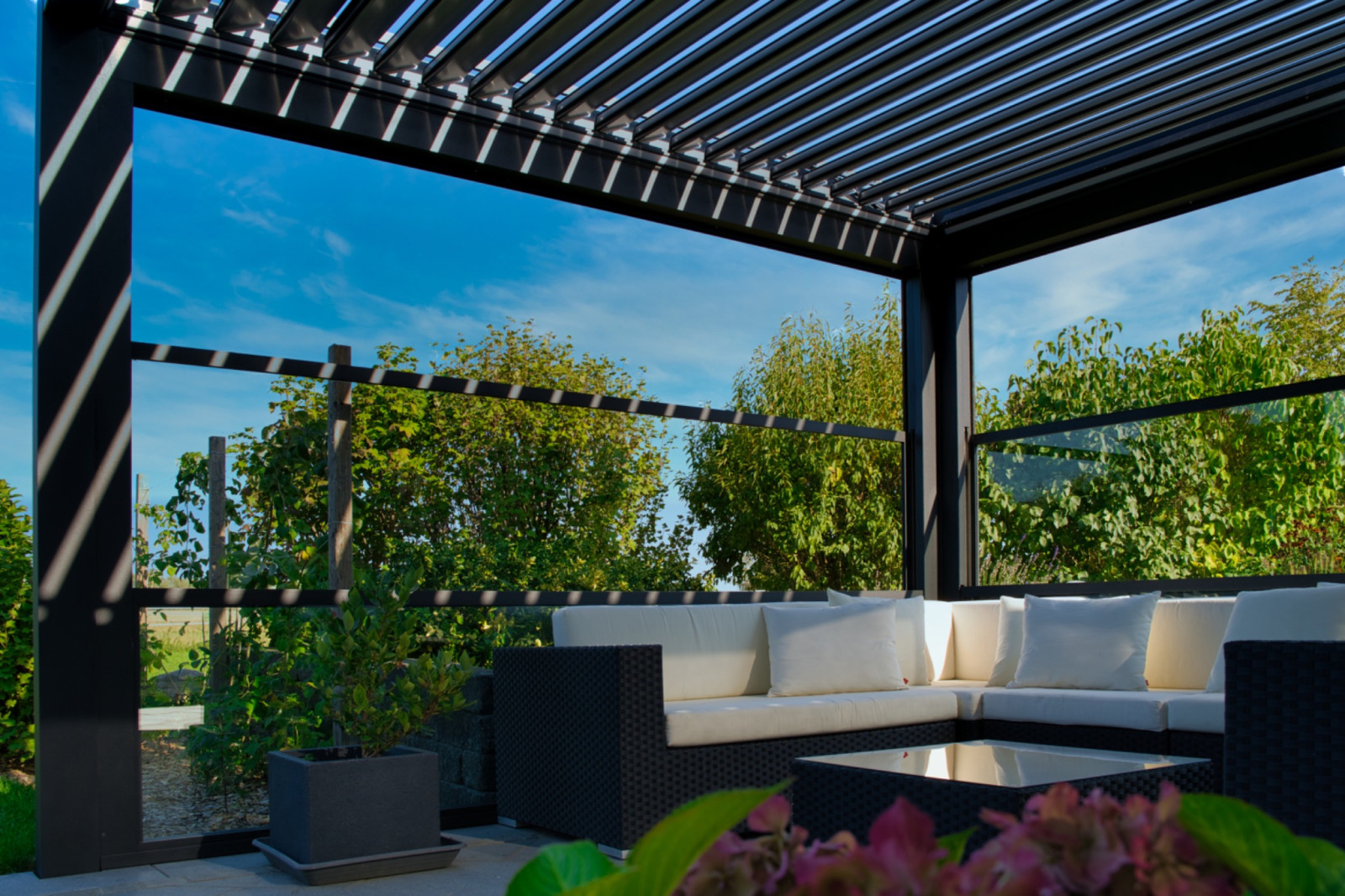
The roof of a pergola is directly exposed to the elements. Leaves naturally accumulate on it in autumn. Clearing them away from time to time is worthwhile, as leaves blocking the drains can disrupt the flow of rainwater. If the model has a movable roof, check for any branches or leaves that may have become trapped as well.
It is also useful to check how water drains after rain. If water collects where it should normally flow away, one of the channels may be blocked. In this situation, the drains should be cleared or, if necessary, checked by a service technician. Leaves and dirt in the drains can divert water to unwanted areas. During cleaning, using suitable equipment is safer than scraping the surface with hard or sharp objects.
Do Not Force Motorised Systems
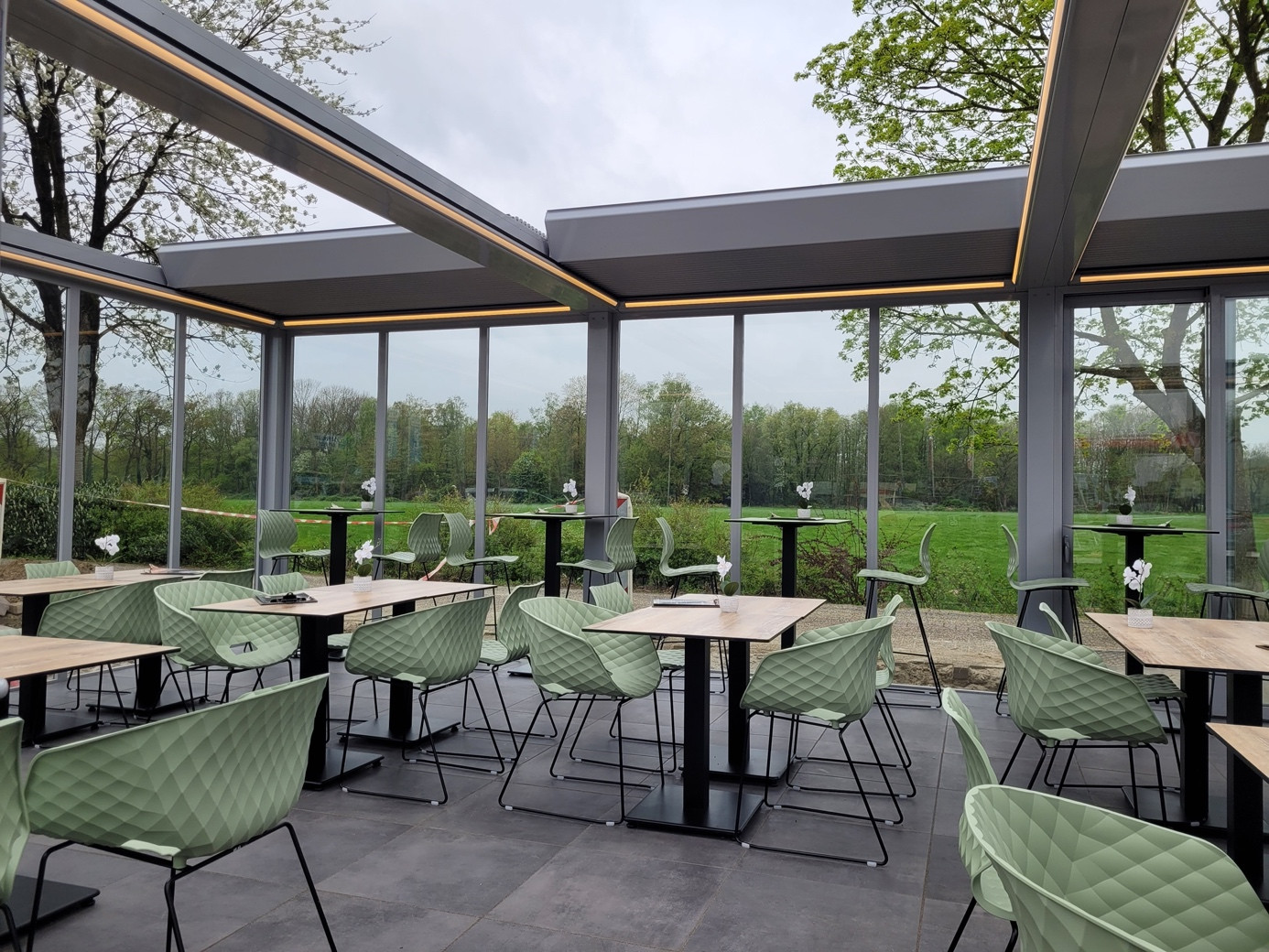
The moving mechanism is the main convenience of motorised pergolas and awnings. At the press of a remote control button, the system opens or closes. However, you should not pull the fabric by hand, try to stop the system manually or apply force against its direction of movement while the mechanism is operating.
If there is an object in front of the awning, or if the system catches on something, stop its movement first. Straining the motor can affect the mechanical components as well as the fabric.
For remote-controlled systems, repeatedly sending the same command is not a solution either. If the system is not working, checking the cause is more sensible than pressing the button over and over.
Do Not Underestimate the Wind
Strong wind is one of the harshest conditions outdoor systems face. A sudden gust while an awning is extended can put strain on the fabric and supporting components. Depending on the pergola's design, additional loads may also act on its moving parts.
When severe weather is expected, closing the system is a sensible precaution. It is worth checking the weather forecast, particularly if you will be away from home for an extended period. If an automated system is equipped with a wind sensor, this feature can also be used.
An important point to remember is that products do not all withstand the same wind conditions. You need to understand the technical limits of your system. Asking for this information at the time of purchase can help prevent incorrect use later.
Check Connection Points from Time to Time
Pergolas and awnings include more than the large components you can see. Screws, fixings, structural profiles and various moving parts also contribute to the system's operation. Vibration and use can cause some connections to loosen over time. If you notice looseness in a component, more noise than usual or sticking during opening and closing, it is better to have the system checked than to continue using it.
You do not need to dismantle or tighten every component yourself. Incorrect intervention can cause further faults, particularly in motorised systems and moving mechanisms. Having a service technician inspect an apparently minor issue can sometimes prove less costly.
Lasting Solutions with Palmiye Global
Long-term use of pergola and awning systems is directly linked to product quality, the materials used and professional installation, as well as regular maintenance and correct use. Choosing durable structural components, particularly for systems constantly exposed to outdoor conditions, improves comfort in use and helps reduce maintenance and repair needs over time.
With its experience in pergola and awning systems, Palmiye Global provides outdoor solutions for a wide range of settings, from homes and commercial premises to hotels, restaurants and cafés. Systems selected to suit the architecture and intended use help make outdoor spaces more functional and comfortable while maintaining a cohesive appearance.
For motorised pergola systems, automated awning solutions and modern outdoor shading systems, professional installation is as important as selecting the right product. Palmiye Global's solutions take the characteristics of the space, climate conditions and user expectations into account, with long-term use in mind.
Sound planning, quality materials and regular maintenance make it possible to get years of value from an investment in outdoor pergola and awning systems. Explore Palmiye Global's pergola and awning solutions to assess options for your home or commercial space and learn more about professional solutions tailored to your needs.